Description
Description
The benefits of a protein powder formula
The protein powder market is flooded with a wide array of protein sources to fit every possible lifestyle and flavor profile requirement.
Our customers often ask why they should choose one of our protein powder formulas over a more traditional, straightforward protein powder.
While both options have tremendous benefits, our protein formulas include other ingredients that may support your objectives and goals.
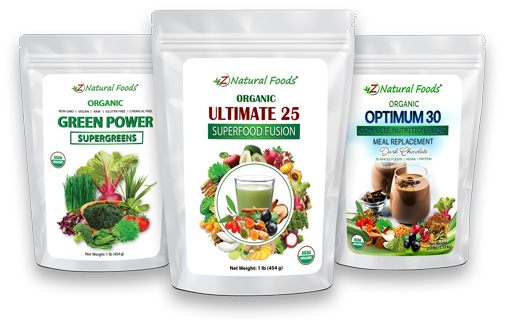
As you know, Z Natural Foods sells a wide array of traditional protein powders as well as unique, house-made formulas that contain protein. For example, our Vitality Blend Coffee Creamer includes collagen protein, our Optimum 30 comes in both whey and vegan protein options, and let’s not forget our newest product, Chocolate Goat Whey protein formula, just to name a few.
In today’s article, I will discuss some of the positive attributes of protein formulas (specifically our Chocolate Goat Whey Protein Formula) and why you may want to consider adding them to your arsenal.
To begin, let’s discuss a topic I have written about many times: the cornerstone for understanding the value of any formula: synergy. However, I will discuss this concept specifically in the context of a protein powder formula.
A deep dive into Synergy
Synergy is the knowledge that the whole is greater than the sum of its simple parts. It is essential to recognize that nourishing qualities in each functional food within our protein formulas have a broader spectrum and more nourishing effect than any one ingredient within that mixture.
Food synergy involves the interaction of various compounds within the food matrix and how they interact with the body’s systems. When eaten as a whole food matrix, no individual compound works alone.
The same concept applies to a protein formula when you break it down into individual ingredients. Each functional food within that formula works well to support your goals as a separate entity. Specific foods have profound effects. However, combining them with other foods based on your goals creates broader-spectrum benefits (through the interaction of different food components), enhancing their individual effects. Therefore, combining Goat Whey Protein with our newest functional food keto blend into a single product creates a perfect combination.
For example, a randomized controlled trial reported that cocoa and whey protein differentially affect markers of lipid and glucose metabolism and satiety. Whey protein is high in leucine and has been shown to decrease hunger ratings and increase satiety hormone levels—Cocoa polyphenolics, on the other hand, moderate glucose levels and slow digestion.
- Leucine treatment increased leptin production by up to 37%
- All beverages significantly moderated blood glucose levels 30 minutes post-consumption.
- Whey protein elicited the lowest peak glucose levels, and high-polyphenolic cacao was significantly lower than low-polyphenolic cacao.
- Whey protein and high-polyphenolic cacao significantly increased adiponectin levels (a hormone produced by fat cells that plays a role in regulating metabolism, insulin sensitivity, and inflammation).
Therefore, it was concluded that combining whey protein and cacao polyphenols may improve markers of metabolic syndrome.
Now, let’s move on to the benefits of each ingredient in our Chocolate Goat Whey Protein Formula.
What Makes Goat Whey Protein So Unique?
Our goat milk whey protein powder is crafted by collecting farm-fresh goat milk from the Netherlands and utilizing both traditional and time-tested techniques, combined with modern technology, to produce a creamy, rich whey concentrate with an 80% protein concentration.
After the milk is collected, it is immediately brought to the processing facility, where a coagulant is added to create cheese and separate the curds from the whey. The liquid whey is drained to separate it from the curds and then undergoes a cold filtration process, which filters out any unwanted components.
Finally, using a low-temperature method, the whey is dehydrated to remove moisture, and the dehydrated whey is ground into a fine powder to create a smooth texture.
Next, the difference between A1 (found in specific types of cow milk) and A2 casein protein (found in goat's milk) may have a profound impact on your ability to digest whey protein.
When you look at the whey protein market, it is clear that the isolate form of whey protein is the more popular choice. The primary reason is that it has almost no lactose and is often much easier to digest. Unfortunately, this fact has prevented many people from enjoying the amazing, nourishing benefits of whey concentrate until now. Casein is the largest group of proteins in milk, accounting for approximately 80% of the total protein content. A1 and A2 are beta-casein variants. While they are pretty similar, their primary difference is at position 67 of the amino acid sequence: histidine for A1 and Proline for A2.
However, research suggests that this slight difference has quite an impact on digestion. It is believed that A1 beta-casein releases an opioid peptide (BCM-7) that is considered to be a precursor to various health issues like gut health, heart disease, and diabetes through the increase of systemic inflammation.
The following was stated in a randomized controlled trial examining the effects of milk containing only A2 beta-casein versus milk containing both A1 and A2 beta-casein proteins on gastrointestinal physiology, symptoms of discomfort, and cognitive behavior in individuals with self-reported intolerance to traditional cow's milk.
- Compared with milk containing only A2 β-casein, the consumption of milk containing both β-casein types was associated with significantly greater PD3 symptoms;
- Higher concentrations of inflammation-related biomarkers and β-casomorphin-7. Longer gastrointestinal transit times, lower levels of short-chain fatty acids, and increased response time and error rate on the SCIT.
- Consumption of milk containing both β-casein types was associated with worsening PD3 symptoms relative to baseline in lactose-tolerant and lactose-intolerant subjects. Consumption of milk containing only A2 β-casein did not aggravate PD3 symptoms relative to baseline (i.e., after washout of dairy products) in lactose-tolerant and intolerant subjects.
Therefore, it was concluded that “consumption of milk containing A1 β-casein was associated with increased gastrointestinal inflammation, worsening of PD3 symptoms, delayed transit, and decreased cognitive processing speed and accuracy. Because the elimination of A1 β-casein attenuated these effects, some symptoms of lactose intolerance may stem from the inflammation it triggers and can be avoided by consuming milk containing only the A2 type of beta-casein.
Goat Milk Whey is an Undenatured Protein
Protein function depends on its structural shape, and heat causes proteins to vibrate, weakening the bonds that hold their complex shape. Undenatured proteins are pure, properly functioning proteins that retain their native structure, with all bioavailable nutrients and constituents intact.
Undenatured Goat whey protein contains various components, including beta-lactoglobulin, alpha-lactalbumin, immunoglobulin, and lactoferrin. This type of protein is generally a much better choice for all intended purposes.
However, it is essential to understand the concept of denatured protein and why it is not necessarily bad.
- Denatured protein is the alteration in the folding pattern of a protein by heat or chemical reaction from its original formation. When a protein has become denatured, it is no longer considered functional in the same elaborate manner.
- A protein denatured through cooking with heat or some other process is not necessarily bad, as we often consume this form of protein. For example, a hard-boiled egg is regarded as a form of denatured protein. The heat used to make a hard-boiled egg alters its structural integrity. Still, it retains excellent nutritional value and all the essential amino acids necessary to create a complete protein.
Many companies use a “natural” chocolate flavoring in their protein powders. However, here at Z Natural Foods, when we create a chocolate protein, it is with real cacao.
Cacao: The food of the gods
Cacao, one of nature's most wondrous creations, is revered as one of the most incredible foods on earth and valued by shamans and ethnobotanists alike.
Several compounds found in cacao, such as Theobromine and Phenylethylamine (PEA), are known to stimulate the nervous system in a healthy manner, supporting heightened awareness and a state of bliss that is highly beneficial for spiritual practices. Cacao also contains small amounts of Anandamide, known as the bliss molecule.
While we don’t fully understand all aspects of how it works, research suggests that Anandamide is part of our endocannabinoid system, binding to cannabinoid receptors and affecting brain reward circuitry and dopamine levels, acting as a behavioral reinforcer. Anandamide is believed to contribute to the euphoric feeling associated with the runner's high experienced after intense exercise. When working synergistically with Theobromine and PEA, it can further support the sense of relaxation and happiness, allowing you to dive deeper into the realms of your consciousness. Cacao is considered a plant ally that helps facilitate these benefits by opening the heart and centering the mind.
Alkalized aka Dutched Cacao Powder
You may have seen terms like 'Dutch' or 'alkalized' on a product label (also known as cocoa) and wondered what they mean. The process involves washing the cacao in a potassium carbonate alkaline solution. This process reduces bitterness and pH levels and neutralizes acidity, which completely changes the flavor profile of the end product. Pure cacao has a pH level of around 5-6, characterized by a sharp, bitter flavor profile. Dutch-processed cocoa powder has a pH level of 7 and a smooth, mellow, earthy flavor profile.
This neutralizing process prevents the cocoa from reacting with baking soda. For these reasons, Dutch-processed cocoa was for a long time the more popular choice for baking. Today, people's palates are changing as they increasingly eat dark chocolate and become lovers of natural, pure cacao.
Here at ZNF, we recognize that our chocolate goat milk whey protein blend, which utilizes alkalized cacao, may not suit those who prefer the complex, bitter profile and significantly more substantial benefits of pure cacao. However, while it is true that the natural, nonalkalized powders have the highest ORAC and total polyphenols and flavanols (including procyanidins), alkalized cacao still contains these potent compounds, just at lower levels. The primary purpose of using an alkalized cacao is to change the flavor profile.
Our new chocolate goat whey protein concentrate now includes our new improved functional Keto Blend Powder. This blend features the perfect ingredients to help you get into and stay in ketosis, supporting your ketogenic experience.
1) C8 MCT Oil: A fatty acid with unique qualities
Fats constitute the most significant nutritional source of energy. Medium-chain triglycerides are uniquely processed in the body, making them easier to digest and metabolize. This provides your body with plenty of readily available energy and supports your overall health and well-being. In the past, MCTs were considered unhealthy due to their high saturated fat content. However, it has now been proven that MCTs are unlike any other fat in nature and have very high therapeutic value.
So, why is MCT fat different from all the others?
MCTs are unique fat molecules that make them different from most fats we consume. The following was stated in a paper titled “Medium-chain triglycerides (MCT) formulas in pediatric and allergological practice.”
- MCTs' proper use by the body involves several complex mechanisms of digestion, absorption, distribution, and metabolism.
- These mechanisms are facilitated by fats containing medium-chain fatty acids (MCFAs), making them an easy, quick energy source.
- A quality supply of medium-chain triglycerides (MCT) is essential for digestion and absorption.
The Purpose of picking MCTs for our blend
One of the key mechanisms of action for MCTs is the generation of ketones. They are believed to provide the brain cells with an energy source more efficient than glucose, supporting metabolic changes that include directly inhibiting AMPA receptors (glutamate receptors) and altering cell energetics through mitochondrial biogenesis. Furthermore, the characteristics of MCTs make them easier to digest, absorb, and metabolize than long-chain fatty acids.
2) Milk Protein (from non-fat dry milk)
Many foods provide nourishing amounts of high-quality protein; each is unique in its own right. One of the many nutritional qualities of whole milk is its unique blend of fast-digesting (whey) and slow-digesting (casein) proteins, enabling optimal utilization of this essential macronutrient. The following was stated in an article in the National Library of Medicine titled "Health-Related Aspects of Milk Proteins."
- Casein and whey protein are the major proteins of milk
- Casein constitutes approximately 80% of the total protein in bovine milk, and whey protein accounts for about 20%.
- Casein is primarily phosphate-conjugated and forms phosphate micelle complexes. It is a heterogeneous family of 4 major components: alpha (As 1 & 2 casein), beta-, gamma-, and kappa-casein.”
- Whey protein is a collection of globular proteins with a high level of α-helix structure.
- The acidic, basic, and hydrophobic-hydrophilic amino acids are distributed in a fairly balanced form.
- Alpha-Lactalbumin and beta-lactoglobulin are the predominant whey proteins.
- Among other whey protein components, immunoglobulins, serum albumin, lactoferrin, lactoperoxidase, and protease-peptones must be mentioned.
3) Soluble Fiber (Tapioca Source and Acacia Gum)
There are three primary reasons why it is important to add soluble fiber to our goat whey protein keto blend.
- Soluble fiber acts as a binding and emulsifying agent: It stabilizes fats and ensures the blend mixes smoothly without separating. Fats, such as MCTs, naturally float to the top, and soluble fiber binds to these fats, allowing them to dissolve perfectly. Soluble fiber dissolves into a subtle gel-like matrix when mixed with liquid. This mimics the rich, heavy viscosity of real dairy cream.
- It keeps your product keto: Because soluble fiber is indigestible and does not spike your blood sugar, it won’t kick you out of ketosis.
- Supports healthy digestion: Because the ketogenic diet is low in plant fiber, soluble fiber acts as a prebiotic, promoting regularity. Furthermore, it slows gastric emptying, promoting a feeling of fullness.
4) Butter (Grass-fed)
As more is learned about food science, we understand the wide range of components in butter, such as fat-soluble vitamins and essential fatty acids; therefore, how these fats function in the body takes on new meaning.
According to a review titled Composition, structure, and absorption of milk lipids: a source of energy, fat-soluble nutrients, and bioactive molecules, “Milkfat is not only a source of bioactive lipid components, but it also serves as an important delivery medium for nutrients, including the fat-soluble vitamins (A, D, E, and K). Bioactive lipids in milk include triacylglycerides, diacylglycerides, saturated and polyunsaturated fatty acids, and phospholipids.”
“Among the 12 major milk fatty acids, only three (lauric, myristic, and palmitic) have been associated with raising total cholesterol levels in plasma, but their individual effects are variable, both towards raising low-density lipoproteins and raising the level of beneficial high-density lipoproteins. The cholesterol-modifying response of individuals to consuming saturated fats is also variable.” Therefore, milkfat's composition, functions, and biological properties will need to be re-evaluated as the food marketplace moves increasingly towards more personalized diets.”
Butter was determined to contain, per tablespoon (14 grams):
- 70% saturated fatty acids
- 25% monounsaturated fatty acids
- 2.5% polyunsaturated fatty acids
- Around 11% of saturated fatty acids are short-chain fatty acids, specifically butyric acid (C4).
- Grass-fed butter has around 250mg of CLA per tbsp, and regular butter has around 50mg.
The following was stated in a study discussing the effects of oral butyrate on mildly to moderately active Crohn's disease.
- Among the nine patients (69%) who responded to treatment (4 grams daily for 8 weeks), seven (53%) achieved remission, and two had a partial response.
- Endoscopic and histological scores at the ileocaecal level improved significantly after treatment (P < 0.05).
- Leucocyte blood count, erythrocyte sedimentation rate, and mucosal levels of NF-kappaB and IL-1beta significantly decreased after treatment (P < 0.05).
Therefore, the following was concluded. “Oral butyrate is safe and well-tolerated and may be effective in inducing clinical improvement/remission in Crohn's disease. These data indicate the need for a large investigation to extend the present findings and suggest that butyrate may exert its action through downregulating NF-kappaB and IL-1beta.”
5) Refined Coconut Oil
Refined coconut oil is produced by cold-pressing the meat to extract the oil. However, this refined version is then cleaned, filtered, and steam-distilled to remove impurities, odors, and color, resulting in a completely neutral, plain scent and taste with a higher smoke point. While there is a trade-off in this process, such as the loss of antioxidants, the refining process does not destroy or alter the fatty acid chains, resulting in the same level of MCTs you found in unrefined coconut oil.
What is the purpose of adding both C8 MCT powder and refined coconut oil to our Keto Mix?
In simple terms, they both create unique benefits. C8 has the shortest carbon chain among the major MCTs, allowing it to bypass standard digestion and reach the liver, where it is converted into ketones within minutes. It is estimated that C8 alone is 3 times more ketogenic than other MCTs, providing an instant, alternative energy source for the brain and ensuring your body gets the most concentrated, efficient fuel and ketone production available. Furthermore, C8 is significantly easier to digest and less likely to cause digestive distress.
Coconut oil contains C8, C10, and C12 fatty acids, so it provides both fast- and slow-burning sources of these essential fatty acids for sustained energy. Furthermore, lauric acid in coconut is known for its super-nutritional value. Lauric acid is a saturated medium-chain fatty acid with a 12-carbon backbone that is also found in human breast milk.
The presence of lauric acid in coconut is also known for having super-nutritional value. Lauric acid is a saturated medium-chain fatty acid with a 12-carbon backbone that is also found in human breast milk.
6) Ghee
Essentially, ghee is produced by simmering butter to remove water and milk solids (proteins and lactose). The result is a pure, nutty butterfat rich in the following.
- Fat-soluble vitamins A, D, E, and K
- Butyrate: a short-chain fatty acid produced by the gut that supports intestinal barrier integrity and reduces inflammation.
- Medium-chain fatty acids that are specifically known to enhance nutrient absorption and promote gut energy metabolism,
- CLA: fatty acids have anti-inflammatory properties and support brain health, potentially complementing the neuroprotective and cognitive-enhancing effects of Bacopa
Because Ghee is a pure fat, it acts through the following mechanisms:
- Ghee is a lipid carrier that facilitates passage across the lipophilic blood-brain barrier by mimicking body lipids. Therefore, it is well known in Ayurvedic medicine for delivering fat-soluble active herbal compounds deeper into nervous system tissues.
- Ghee is also considered a Medhya (intellect-promoting) substance that nourishes nervous tissue/bone marrow and improves overall absorption (known as digestive fire). High-quality fats are the ultimate nourisher for the nervous system.
Ghee is effective in this context because it is rich in saturated fats and short-chain fatty acids, such as butyric acid. These fatty acids effectively dissolve and transport fat-soluble compounds across cell membranes, delivering them into deeper tissues and organs. Furthermore, Ghee is a pure, clean, animal-based fat (free of protein and lactose) rich in all fat-soluble vitamins, further enhancing bioavailability.
Ultimately, ghee is used as the primary carrier because of its purity, unique fatty acid profile, and high oxidative stability.
All-In-One: The Versatility and Ease of having everything in one package.
As if all the reasons above weren't enough to convince you to add a protein formula to your arsenal, consider the convenience of having all the essential ingredients in one package, ready for any situation on the go.
These two aspects alone create powerful effects: they save space (no need for four different bags) and help you save money. In a world full of high-tech gadgets and complex daily lives, people are now more than ever looking for ways to stay consistent with their lifestyle habits.
Therefore, consumers rely on companies to create products of the highest quality that provide simplicity and versatility. Combining simplicity and versatility creates convenience, which in turn leads to greater compliance. Talk about synergistic effects.
The bottom line is that simplicity and versatility have powerful effects. Our Chocolate Goat Whey Protein Formula has checked all of these boxes. Therefore, if you are looking for a product that can stand toe to toe with the best of them and keep you on the right track, we've got ya covered.
For more information about our Chocolate Goat Whey Concentrate, go here: Chocolate Goat Whey Concentrate.
The Author’s Bio
Michael Stuchiner is a Master Herbalist and proud graduate of The School of Natural Healing and has worked in different areas of this field for over 25 years. He is a retired elite-level powerlifter who competed for 27 years. As an avid international traveler, he is passionate about the use of medicinal and tonic herbs, as well as foods traditionally found in local markets in the 35 countries he has visited. Michael shares his years of experience as a Master Herbalist, traveler, and athlete through the hundreds of articles he has written and his YouTube channel, "A Master Herbalist Perspective." He is considered a true educator in this field. For more articles written by Mike, go here: Master Herbalist.
RELATED ARTICLES