Description
Description
Welcome to part five of the Master Herbalist Guide to International Travel Series, a valuable resource for all travelers.
If you haven't yet explored parts one through four, you're missing out on a wealth of helpful information. Go here to review part four, where you’ll see my Top Functional Foods, Herbs, and Supplements for Travel.
I also encourage you to check out my 2-part series on a kid-friendly guide to using superfoods (Go here to visit: Part 1 and Part 2); it is one of the most comprehensive series online that discusses the value of traditional and common superfoods for children. I discuss the tradition of children consuming superfoods, my top superfood picks for kids, and how to safely incorporate them into your child’s diet.
This series presents a perspective you won't find anywhere else on a unique and underrated value that superfoods provide to parents.
However, today’s article will have a different focus: In part 5 of a master herbalist's guide to international travel, I will cover the following aspects of international travel for children.
- The most common health-related travel issues for children
- Teaching your children about foods from other cultures
- The value of superfoods when traveling with children
- Why you should encourage your children to try traditional foods from different cultures
- My top 2 superfood picks when traveling with children
Before we get started, I would like to remind you of the following.
I'm an herbalist with over 20 years of experience and have worked with people from all walks of life, including many parents, to help their children overcome health issues with very good success. Furthermore, I have traveled extensively to 35+ countries, exploring food and medicine in rainforests and local markets, sampling dishes, and studying food habits unique to these cultures. What you are about to read in this article are only suggestions based on my experience and the feedback from the parents I have worked with.
So, let’s begin
In reality, when you take a hard look at the issues children encounter when traveling abroad, it is not all that different from adults. In part 2 of my travel series, I discuss some of these issues. However, based on feedback I receive from parents, the following are the top issues affecting children:
- Immune system issues
- Bowel issues: constipation or diarrhea
- Sleep patterns disrupted
- Blood clots (allow me to explain)
For clarity, all of these issues are fairly common for children, and long flights that cross multiple time zones, along with other issues that occur from flying, may exacerbate them. However, let’s discuss the one issue on the list above that may concern parents most, so I can ease your concerns: blood clots.
Most medical institutions agree that while it is extremely rare for children to develop blood clots when flying, keep in mind that the average child consumes around 70% of their diet as ultra-processed foods (I personally believe it is closer to 90%). Therefore, there has been a staggering rise in obesity and metabolic illness in children that is directly connected to these highly processed foods. We are living in times where too much screen time, not enough movement, and not enough time in nature have created the highest rate of child obesity and metabolic disorders, as well as anxiety and gut health issues.
According to the NIH, there has been a significant rise in gut health issues in children, with researchers reporting increased instances of dysbiosis (bacterial imbalance) related to chronic conditions like allergies, obesity, and inflammatory bowel diseases. Key issues include chronic constipation, food sensitivities, and "leaky gut," often linked to modern lifestyle factors.
Obesity and metabolic issues are a winning combination for setting up future health issues for children. Now, let’s combine that with a long flight, neglecting good habits like drinking enough water, eating good food, and getting up to move around to promote circulation. It is a perfect storm for creating an environment conducive to blood clot formation. However, with a little forethought and planning, it is entirely avoidable.
To begin, here are some things you can do to help avoid this issue. The good news is that following these suggestions may also knock out two other issues on the list: bowel and immune issues.
1) Take the time leading up to a trip to transition your kids' diet and encourage more movement and less screen time:
It is very common to plan a family vacation (especially abroad) at least 2-3 months in advance. Therefore, use that time to make some simple changes to your child’s lifestyle. There are plenty of great suggestions in Part 2 of the kid-friendly guide for using superfoods. This idea is two-fold.
- First, it will improve your kids' health. If you choose the superfoods native to the areas you are traveling to, it will help them acclimate to the local diet and potentially prevent sudden bowel issues that could sidetrack your trip.
- Second, it will excite them to appreciate food from a different culture and to try more. Finally, encourage plenty of daily movement to support a healthy body weight, circulation, and blood sugar.
2) Encourage daily healthy hydration habits:
Flying (especially long-distance flights) can create less-than-favorable conditions for overall health. A perfect example is the aspect of dehydration when flying. If you consider two simple facts beyond your control, such as reduced air pressure and low cabin humidity, you end up with a perfect environment to suck the fluids out of your body. While everyone is different, it seems the average humidity level for good health is 40-50%. On airplanes, the humidity is on average 10%.
Here are some fun facts about dehydration and the importance of keeping hydrated:
- You only need 1% dehydration to potentially experience a 5% decrease in cognitive function.
- Prolonged dehydration causes brain cells to shrink, and even a 2% decrease in brain water content can result in short-term memory loss.
- The human body comprises around 60% water (muscles around 80%).
- It is generally accepted that the human body cannot survive without fluids for more than three days.
- In simple terms, without water, organs shut down, nutrients can't be delivered to cells, waste can't be flushed out, and body temperature can't be regulated. We all know how that story ends.
Electrolytes are minerals that are present in blood, urine, cells, and bodily fluids. When dissolved, they form ions that carry an electric charge. However, electrolyte imbalances are not just about deficiencies.
Too much can be as harmful as too little, especially with sodium and potassium. For example, a deficiency in sodium and potassium can cause confusion, fatigue, muscle twitching, muscle cramps, and an irregular heartbeat. When there is an excess of sodium and potassium, there is a potential for irregular heartbeats, muscle cramps, and excessive urination. Electrolyte balance is delicate, and prolonged disruption can lead to chemical changes in the brain, potentially resulting in mood, cognitive, and hormonal imbalances. These effects may occur because electrolytes are crucial for neural communication and neurotransmitter release.
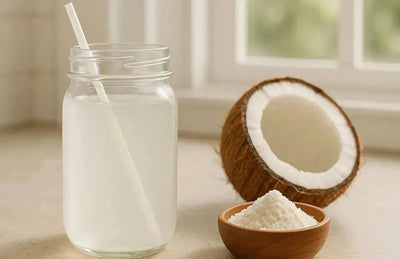
Yes, I know that drinking plain water all day is very boring, and drinking too much can, in fact, deplete you of essential electrolytes. Therefore, the solution is to incorporate coconut foods into your kid’s diet. Giving them a serving of coconut water or a coconut smoothie with coconut water and coconut meat is a great and very tasty way to support healthy hydration habits. Keeping properly hydrated is also helpful for avoiding irregular bowel habits that may occur during international travel.
3) Pack and bring your own food onto the plane
As most experienced travelers know, airplane and airport food can, at best, be a bit sketchy. Also, you don’t know about any hidden ingredients that may cause an allergic or bowel reaction. Therefore, bring your own homemade prepared food. It is the only way to ensure that you and your kids get a meal that will nourish and sustain them throughout the flight. However, never overfeed. It is well known that overeating while flying exacerbates jet lag by disrupting the body's internal clock (which relies on meal timing) and stressing the immune system, leading to fatigue, increased inflammation, and reduced resistance to infections. So, the lesson is not to overeat and try to keep your kids on a normal eating schedule.
4) Movement during flight
Without disturbing others, encourage your kids to get up and walk around every hour on flights longer than 4 hours. This will encourage circulation and healthy blood flow.
5) Disrupted sleep patterns
This issue may be a bit more challenging with children. However, the following is based on feedback from parents who travel internationally with their kids. When flying, try to keep your kids on a normal sleep schedule as much as possible.
Next, if possible, try to take an early-evening flight so you arrive at your destination in the morning. Then, of course, do your best to keep them up all day so they can adapt to their new sleep pattern. While these tips may not totally eliminate this issue, they will surely help a lot. A little herbal trick that I have suggested over the years and gotten great feedback on is to pack some chamomile tea bags for the trip.
Chamomile is a mild but effective antispasmodic, carminative, and sedative. It can be extremely useful if you need to keep your kids on a specific sleep schedule. However, it is always recommended that you first try it at home to see how your child responds.
Food Education: Teach your kids about food traditions from other cultures.
This can be a fun family project that may get your child excited about the adventure you are all about to go on. In part one of my kid-friendly guide to using superfoods, I discuss the long-standing traditions in many countries of feeding children superfoods starting at a young age. To be clear, nothing replaces the full food and market experiences at your destination quite like being there and experiencing those glorious moments in real time.
However, reading about these amazing traditional foods/experiences and, when possible, slowly incorporating them into their diet will begin to excite your kids, educate their palates and taste buds, and open their minds to all the wonderful flavors the world has to offer.
Furthermore, it teaches them about the importance of quality ingredients (I recommend sourcing them from those specific countries, especially pasta and flour). Start by having a family dinner once a week, which is traditional in the country you are about to travel to, where everyone participates in the process. Consider making your travel about adventure, markets, and the unique flavors of your destination. I said this in my travel article series, part one:
To truly experience a country's culture, you won't find it in the tourist traps. You find it through adventure and exploration. Furthermore, the sweet spots are found in the food and local markets where REAL locals go.
The following is something else to consider.
If you are looking to get your kids excited about foods from other cultures, nothing will do that quite as well as a private cooking class. This is when you and your family will have a real, hands-on experience learning to make authentic dishes using local ingredients. Nothing quite teaches you about the value of great food like the experience of preparing it yourself under the guidance of a local grandmother. I strongly suggest that you seek out that opportunity.
However, it is essential that you also experience the restaurants where locals eat these delicious dishes. Unfortunately, many people believe that great food experiences in foreign countries are limited to expensive Michelin-starred restaurants.
That idea is entirely false. As a matter of fact, many seasoned travelers I have met throughout the world, myself included, agree that the vast majority of these Michelin-starred restaurants are nothing special. Two dirty secrets about them may surprise you:
- The Michelin star belongs to the chef and not the restaurant specifically.
- In many of these restaurants, the chef who earned those stars may no longer work there and may only have created the menu, which is prepared by people they trained.
Therefore, you may not get what you pay for. That is not to say that some of these restaurants are not incredible. I recommend inquiring about these aspects before spending the money.
Finally, I also strongly encourage you to hire a private guide to help you experience the food and markets. When you hire a local private guide, you get personalized experiences, insider knowledge, and efficient navigation. However, always make time for yourself to roam around and “get lost”. If you haven't gotten lost while exploring, you don’t know what you are missing.
Sometimes, that is where you find the best stuff. Keep in mind that adventures, in some cases, can have moments of uncertainty. Therefore, having a private local guide can help keep you safe and navigate those experiences. For example, visiting authentic local markets can be exciting to the eyes and taste buds. However, one wrong move can put your trip on hold because you can’t leave the bathroom, and no one wants that situation. Having a local private guide can help you avoid that disaster. You may think hiring a private local guide is expensive.
However, when you do the math at the end of the day, you realize that because your guide helped you avoid all of the costly touristy restaurants and locations, it saved you money. Remember to get the guides’ and each vendor's contact info, as they are wonderful sources of information.
The Great Transition: The Value of superfoods when preparing to travel with your kids
A while back, I wrote an article about the difference between chocolate and cacao. In that article, I argued that 100% cacao was the truly superior whole food compared to 60-90% cacao solid bars.
However, I did not throw the baby out with the bathwater. I did not tell you that lower-percentage chocolate was useless or of no value, did I? No, instead, I told you to use those various percentage bars as transitional tools to become a real cacao consumer.
Yes, I know that the lower-percentage bars contain sugar. However, you are using them to get to the end goal; therefore, they are a means to an end. This method helps to transition the taste buds so it is not so overwhelming. Let’s face it, if you go from something sweet to something bitter, you will more than likely fail.
Well, while traditional superfoods are not a “necessity” in a child’s diet, when used correctly, they are outstanding transitional foods that help move your children away from ultra-processed foods and set the groundwork for a consistent, real-food diet. The transitional period serves two important functions.
- By consuming traditional superfoods, you slowly build up their nutritional reserves, which form the foundation of their ability to adapt.
- This process helps their taste buds appreciate wholesome, high-quality foods, which may lead to a desire to make better food choices. It will give them a new respect for food and open their world to something extraordinary. Let’s call this their secret food education. Remember, a child’s brain can adapt and overcome challenges more readily than an adult's due to higher levels of neural plasticity. Therefore, take advantage of this amazing opportunity.
So, why should you encourage your kids to try foods from different countries and adapt to their eating habits?
Well, this comes down to 3 simple reasons.
- As my father used to tell me, it is always good to try new things because they open your mind and broaden your horizons.
- In the healthiest countries worldwide, the food, ingredients, and eating habits prioritize quality over quantity. The quality of the ingredients is clean, pure, and minimally processed.
- When it is time to eat, nothing else matters. When you sit down to eat a meal, you should be calm, focusing on the food and its flavor, and enjoying what you are consuming. Eating habits in other countries are not primarily about getting something fast and on the go. Eating fast and on the go encourages a lack of respect for food, your body, and your health. When you are stressed and on the go, you will not digest your food as well as if you are relaxed. Remember, food is not just something to shove down your gullet. It is meant to nourish your body and be enjoyed.
Finally, while the list is short and sweet, here are my top superfood picks when traveling with children
1) Elderberries are a parent’s savior to support your child’s immune system, especially when traveling abroad. Like many berries, the power is in the polyphenolic compounds: Anthocyanins and Flavonols. These compounds work to block infections (influenza A, B, and H1N1 viruses) by binding to viral glycoproteins, preventing viruses from entering host cells and replicating.
Furthermore, elderberry enhances the production of inflammatory cytokines (such as TNF-alpha and interleukins), which are signaling proteins that activate immune cells (specifically monocytes) to fight infections. Making their own elderberry syrup is another great way to enhance your child’s food education and teach them self-reliance.
The misunderstood connection between Elderberry and the Cytokine Storm
In recent years, elderberry has been criticized by reductionist thinkers, who accuse this excellent tonic of causing a cytokine storm. To be clear, a cytokine storm, or hypercytokinemia, is a severe immune reaction in which the body releases excessive cytokines into the bloodstream too quickly.
Having a large amount of them released into the body can be harmful. When I say “a large amount”, it is relative to the situation, and you should keep those numbers in perspective.
A cytokine storm can occur due to an infection, autoimmune condition, or other disease. For clarity, cytokines are communication substances released by white blood cells. Some examples of cytokines are interleukins, which act on all immune cells, and interferons, which stimulate infected cells to produce proteins that interfere with viral replication. We need a small increase in antiviral cytokines to fight off respiratory illness. Therefore, it is vital to understand that with cytokine storms, the question is one of scale.
For example, because elderberry is an immune modulator, it will produce a 2-6-fold increase, whereas running a marathon can produce a 100x increase. What this means for you is that, when used correctly, elderberry is a safe and extremely effective tool for your kids and adults.
2) Coconut Water
Coconut water is perhaps one of the most refreshing beverages on earth and one of Mother Nature's greatest sources of hydration. Coconut water is low in calories, contains 94% water, contains 6 grams of sugar per cup, and is a rich source of your primary electrolytes like potassium, sodium, and magnesium. Electrolytes are minerals that are present in blood, urine, cells, and bodily fluids. When dissolved, they form ions that carry an electric charge.
- They are critical for regulating nerve and muscle function, maintaining hydration, and balancing blood acidity.
- The most predominant electrolytes are potassium, sodium, calcium, magnesium, and chloride.
- Electrolyte imbalances can cause a wide range of symptoms, from mild to severe, affecting the GI, cardiovascular, neurological, and muscular systems.
Flying (especially long-distance flights) can create less-than-favorable conditions for overall health. A perfect example is the aspect of dehydration when flying. If you consider two simple facts beyond your control, such as reduced air pressure and low cabin humidity, you end up with a perfect environment to suck the fluids out of your body.
In conclusion, I hope you have enjoyed this addition to my master herbalist travel series and learned some valuable tips and tricks for successfully traveling with your children, getting them excited about international travel, and avoiding potential pitfalls.
Understanding and respecting food is something I believe should be taught at a very young age and passed along from generation to generation. Furthermore, I believe it would have prevented many of the health issues both children and adults face.
Elderberry Popsicle Recipe
- 2 Tbsp. Elderberry Powder
- 2 Tbsp. Blueberry Powder
- 1 Cup Coconut Milk Powder
- 1/4 Cup Chocolate Chips (optional)
- 2 tsp Lemon Juice Powder
- 4 Tbsp. Honey (sweetener as your preference)
- 1 Cup Water
Directions:
- Combine all the dry powders in a bowl.
- Gradually add 1 cup of water, stirring until the mixture is smooth and well combined.
- Add honey or your preferred sweetener to taste and mix well.
- The recipe should make approximately 1½ cups of popsicle mixture.
- Pour the mixture evenly into popsicle molds. Add a few chocolate chips to each mold, if desired.
- Freeze for 6–7 hours, or until completely solid.
- Remove the popsicles from the molds and enjoy!
The Author’s Bio
Michael Stuchiner is a Master Herbalist and proud graduate of The School of Natural Healing, with over 25 years of experience in various aspects of the field. He is a retired elite-level powerlifter who competed for 27 years. As an avid international traveler, he is passionate about medicinal and tonic herbs, as well as foods traditionally found in local markets across the 35 countries he has visited. Michael shares his years of experience as a Master Herbalist, traveler, and athlete through the hundreds of articles he has written and his YouTube channel, "A Master Herbalist Perspective." He is considered a true educator in this field. For more articles written by Mike, go here: Master Herbalist.
RELATED ARTICLES